Frequently Asked Questions
Honest answers to the questions people ask most
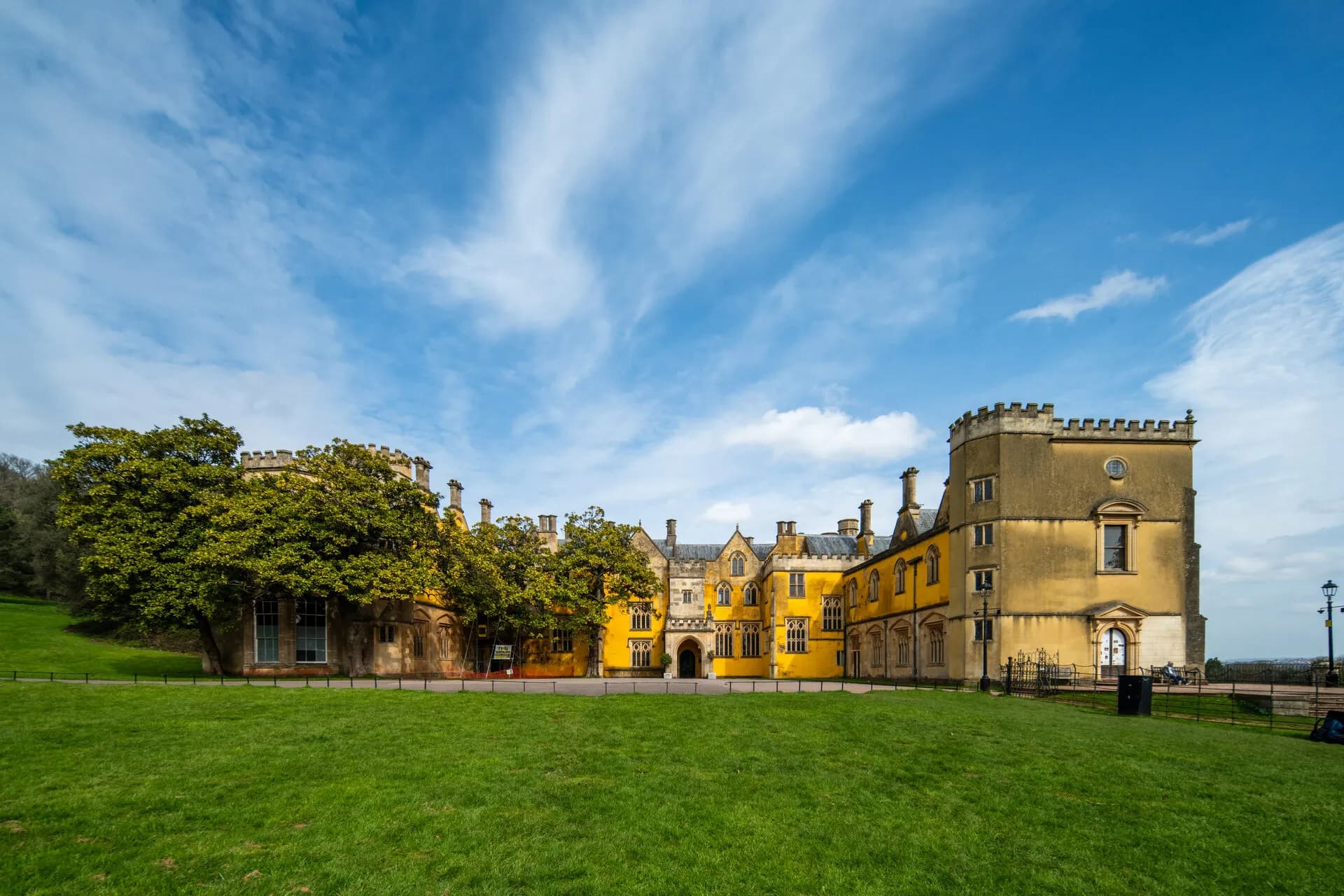
Ashton Court Mansion means a great deal to Bristol. There are plenty of questions about its past, its condition and what happens next. Here are some answers about the building, our plans and the work of Ashton Court Mansion Trust.
The Most Important Thing to Know
 The Most Important Thing to Know
Does Ashton Court Mansion Trust have a lease on the building?
Not yet. Ashton Court Mansion Trust currently occupies the building under a tenancy at will, which allows us to manage the Mansion, carry out agreed works and host events.
We're negotiating a 125-year lease with Bristol City Council. This would give the Trust the long-term security needed to raise funding and undertake the Mansion's regeneration. Securing the lease depends on demonstrating that we have the expertise, governance and financial foundations to take responsibility for a building of this scale.
The Council is expected to consider the proposed lease in November 2026. Even then, securing the lease will be the beginning of a much longer project. Regenerating the Mansion will take decades and require substantial investment.
About Ashton Court Mansion Trust
Who are Ashton Court Mansion Trust?
Ashton Court Mansion Trust (ACMT) is a charity established to secure a sustainable future for Ashton Court Mansion.
Founded by the late Norman Routledge, the organisation was originally known as Bristol Historic Buildings Trust. Norman had spent decades championing Bristol's historic buildings, including Kings Weston House, The Lamplighters and St Michael on the Mount Without.
In September 2026, we became Ashton Court Mansion Trust and converted into a charitable community benefit society. This structure allows people to become members, invest through community shares and have a democratic say in the Trust's future.
Our sole purpose is to regenerate Ashton Court Mansion and operate it for public benefit.
Has the Mansion been bought by a property developer?
No. Ashton Court Mansion remains owned by Bristol City Council, which will retain the freehold under our proposals.
We're seeking a 125-year lease, not ownership of the building. Ashton Court Mansion Trust is a charitable community benefit society. It will be governed by its members, with one vote per member regardless of how much they've invested.
Our purpose is to regenerate the Mansion for public benefit, not to develop it for private residential use or profit.
Are you going to turn it into an exclusive venue or luxury flats?
No. We're not planning private residential flats, and the Mansion won't be solely an exclusive events venue. Our proposals combine public programmes, heritage interpretation, arts and cultural activities, learning, studios and workspaces with commercial uses.
Weddings and private events are an important part of the model: they help meet running costs and support our charitable work. They aren't a substitute for public access and community benefit. As regeneration progresses, we intend to bring more spaces into use, including artist studios above the Music Room.
I heard there are plans to put residential accommodation in the building - is that true?
We aren't planning to convert the Mansion into residential flats.
Our regeneration proposals do include guest accommodation in the North West Wing. This would support weddings and other events, while potentially providing another source of income for the Trust. These would be short-stay guest rooms, not permanent homes.
We also intend to use the existing caretaker's flat as a base for heritage archives and related activities.
What is your relationship with Bristol City Council?
Bristol City Council owns the Mansion and will retain the freehold. In October 2025, councillors unanimously agreed to enter into a Memorandum of Understanding with the Trust to explore a long-term future for the building.
We began agreed critical repairs in early 2026 and took occupation under a tenancy at will in May. We now manage the Mansion day to day while negotiating a proposed 125-year lease with the Council. A Council decision on the lease in principle is expected in November 2026.
The wider Ashton Court Estate, including the parkland, deer park, car park and public facilities, remains under Council management.
About the Building and its History
Was Ashton Court gifted to the people of Bristol?
No. Ashton Court was purchased by Bristol City Council in 1959 from the Smyth estate for 130,000 pounds. It was not a gift. The estate had been in the Smyth family for over four hundred years, but by the time of its sale the mansion was already in a very poor state - decades of financial pressure, two world wars, and spiralling maintenance costs had taken a serious toll long before the council became involved.
Did Bristol City Council let the mansion fall into ruin?
This is more complicated than it might appear, and it is worth understanding the full history. The decline of Ashton Court began long before the council owned it. The Smyth estate had been in financial difficulty since the late 19th century - heavy death duties, two world wars, and the enormous cost of maintaining a Victorian country house meant the family was gradually overwhelmed. By the 1930s, the North West Wing had already been closed up. By the time Esme Smyth died, she was living in just a few rooms with a handful of servants. The mansion had been empty since 1946, and when the council purchased it, there were trees growing through the roof, which had been stripped of its lead.
In buying the estate, Bristol City Council actually saved the mansion from the fate that befell around a third of Britain's large country houses in the 20th century - demolition. A major programme of external repairs in the early 1970s secured the fabric of the building, but ran into serious unforeseen problems: some of the oldest wings could not be saved and had to be demolished, and when restoration of the South West Wing began, it was discovered that foundations needed to be built from scratch, as pre-Victorian houses were typically built on very shallow footings. These unexpected costs consumed the restoration budget, leaving three quarters of the interior unfinished and derelict. A further attempt to restore the North West Wing was halted mid-works when funding was redirected to urgent school repairs elsewhere in Bristol.
An arson attack in 2013 caused serious further damage to the Library in the West Wing. The building has been on Historic England's Heritage at Risk register for over a decade. The Mansion's decline began long before Council ownership, and the Council has undertaken significant repair work over the years. But much of the building has remained unused and deteriorating for decades. Understanding that history matters. So does finding a sustainable way to secure its future.
Why couldn't the council just restore it?
Restoring a Grade I listed building of this scale is exceptionally expensive. The Council explored private investment and other approaches over many years, but a viable long-term model proved difficult to secure.
Commercial operators could make use of the rooms already in reasonable condition, but the cost of bringing derelict spaces back into use was far harder to recover. Public budgets also face competing demands.
A dedicated charitable trust can pursue heritage grants and philanthropic funding alongside commercial income, while keeping public benefit at the heart of the project. That is the approach we're now taking.
Was it not a great wedding and events venue?
It was successful in the 1980s and into the 1990s, but the income generated was never reinvested to keep pace with growing competition. By the time it closed as a commercial venue in 2017, there were only a handful of bookings. Contributing factors included the lack of overnight accommodation for wedding parties, limited privacy due to public access on the South Lawn, and an increasingly dated interior. Reviving and significantly expanding the events offer - properly funded and professionally run - is central to our business model.
What has been happening in the building since it closed?
Artspace Lifespace stepped in just five months after the commercial venue closed and held a meanwhile-use lease until May 2026, activating the building as a community and creative space and preventing it from lying completely dormant. During their eight years managing the building, they welcomed over 100,000 visitors, created a sculpture park during Covid, hosted the Friends of Ashton Court Mansion, and brought events, performances and exhibitions to the building. Their contribution has been invaluable - and we are building on the foundations they laid.
Should the National Trust or Historic England take it on?
The National Trust has previously been approached about Ashton Court, but did not take the project forward. Historic England plays an important role in protecting and advising on historic buildings, rather than routinely taking over their day-to-day operation.
Our approach is to create a locally rooted charitable organisation dedicated to this building, able to raise funds, develop its uses and be accountable to its members.
Is it pronounced Smythe or Smith?
The family name is spelled Smyth but pronounced 'Smith'. An easy one to get wrong.
The Future of Ashton Court Mansion
What is your vision for the building?
A place for everyone.
We want Ashton Court Mansion to become somewhere people come to learn, create, celebrate, explore its history, enjoy good food and spend time together.
Our charitable programme is organised around five areas: Culture, Arts & Wellbeing; Heritage; Skills; Food; and Nature.
Alongside this, weddings, events, hospitality, workspaces and accommodation will generate income to help maintain the building and sustain its charitable activities. The aim is a Mansion that can look after itself financially while making a meaningful contribution to Bristol's cultural and community life.
Has there been proper expert and community input into what Ashton Court could become?
Yes. Our proposals build on years of professional work and public engagement, rather than starting from scratch.
In 2019, heritage architects Purcell produced an options appraisal for Bristol City Council examining possible futures for the Mansion. In 2021, the Council and The Prince's Foundation ran an Enquiry by Design process, informed by a survey of more than 900 people and involving local residents, organisations and businesses.
That work helped establish the case for a mixed-use, community-focused future. Our plans continue to develop through conservation advice, practical experience of running the building and conversations with the people and organisations who want to use it.
Will ACMT be taking over the whole Ashton Court Estate?
No. Our proposed lease covers the Mansion and associated courtyard, with arrangements for access to the formal gardens and lawns. It does not include the wider Ashton Court Estate.
The parkland, deer park, car park, café and public facilities will remain under Bristol City Council's management. The Council will retain the freehold of the Mansion and the wider estate.
What about the formal gardens and lawns around the mansion?
The gardens and lawns immediately surrounding the Mansion are part of our discussions with Bristol City Council. Our proposed arrangements would allow us to use these spaces alongside the Council, rather than take them over exclusively.
We want to work with the Council and others to improve the gardens and create opportunities for outdoor events, learning and volunteering. Public access would remain the principle, although particular areas may occasionally need to close for events or safety.
What about the visitor welcome and hospitality offer at Ashton Court?
We'd like visitors to have a better welcome when they arrive at Ashton Court. The existing café, courtyard and visitor facilities are outside our proposed lease and remain under Bristol City Council's arrangements.
In the longer term, we'd like to explore bringing these spaces more closely into the Mansion's offer, working with the Council and existing interests. This is an ambition, not something agreed or included in our current operating plan.
How much will this all cost?
Tens of millions of pounds, over many years.
Our current business plan anticipates approximately £12 million of regeneration works during the first five years, with further phases to follow. Importantly, we're funding two different things.
First, we need to establish a financially sustainable organisation that can run the Mansion, develop its community programme and meet its day-to-day costs. Separately, the physical regeneration will be funded principally through major grants, philanthropy and dedicated fundraising.
Our community share offer is intended to provide the initial capital needed to establish and grow the Trust's operations. It isn't intended to pay for the major building works themselves.
What is the Community Share Offer?
Our planned community share offer will give people the opportunity to invest in Ashton Court Mansion Trust and become members of the organisation responsible for the Mansion's future.
Membership comes with a democratic say in how the Trust is run. Every member has one vote, regardless of the amount invested.
The money raised will help establish the Trust as a financially sustainable organisation, supporting its operations and community programme as we begin the long-term regeneration of the building.
Community shares are an investment, not a donation, and carry financial risk. We'll publish full information about the offer when it launches.
Will the public be able to access the building?
Yes. Increasing opportunities for people to visit and use the Mansion is central to our plans.
That includes public open days, guided tours, exhibitions, workshops, learning activities and community events.
The Mansion won't be open to visitors at all times. Some spaces will be used for private events, while others will be unavailable during conservation work. But our aim is to bring more of the building into use, for more people, as regeneration progresses.
How can I get involved or support the project?
There are plenty of ways to get involved. You can volunteer your time or skills, attend an event or open day, share an idea, work with us as a partner or make a donation.
We're also preparing a community share offer, which will provide another way to support the Trust once it launches. In the meantime, spreading the word and joining our mailing list make a real difference.
Visit our Support Us page or get in touch to find out how you can help.
Still have questions?
Get in touch and we will do our best to help: comms@ashtoncourtmansion.org