Regeneration
Our Approach to Regeneration
An old building. New possibilities.
Ashton Court Mansion has changed many times over its 600-year history. Different generations have added rooms, altered interiors and adapted the building to suit their needs.
We're not trying to turn back the clock.
Our approach is to conserve what makes the Mansion significant while adapting it for the people who will use it next. That means looking carefully at its history, making thoughtful decisions about what to repair and creating spaces that can be put to good use.
The aim is a Mansion that can sustain itself financially, welcome more people and support a wide range of activities for years to come.
A building shaped by centuries
There isn't one single version of Ashton Court Mansion that we're trying to recreate.
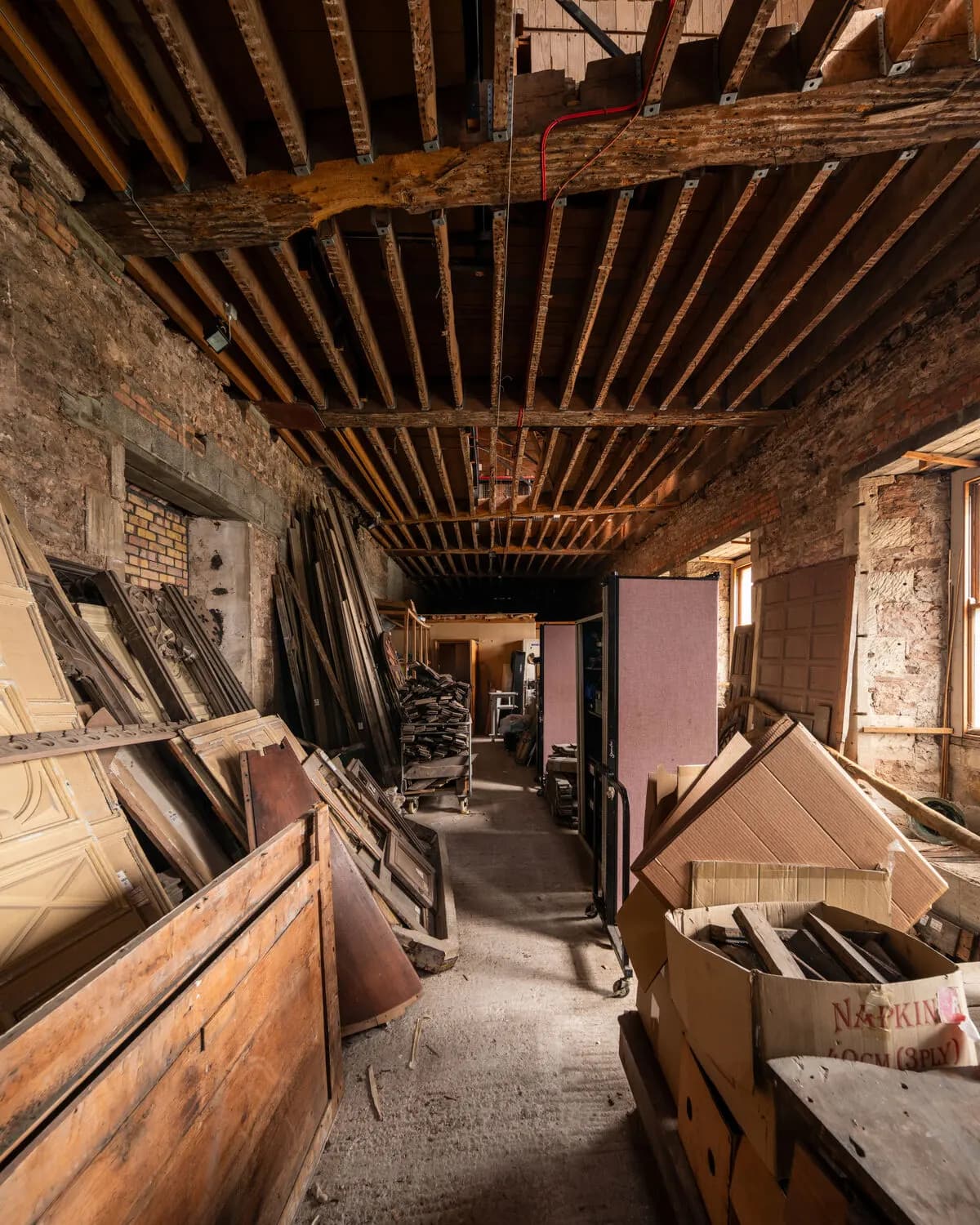
The building has developed over centuries. Elizabethan, Georgian and Victorian additions sit alongside later alterations, repairs and the traces of more recent events, including the 2013 fire.
These different layers are part of what makes the Mansion interesting. We want to respect them, rather than choose one period and attempt to make the whole building look as it did then.
That doesn't mean preserving every room exactly as it is today. Some spaces will need careful conservation. Others will need more substantial changes to make them useful, accessible and financially sustainable.
Each room will require its own approach, informed by its history, the surviving features and what we want it to become.
A Mansion with a job to do
The Mansion's future depends on people having reasons to use it.
We want to create places for food, culture, arts, wellbeing, learning, making and community activity, alongside opportunities to explore the building's history.
Commercial uses matter too. Weddings, events, overnight accommodation and workspaces can generate income to help maintain the building and support its wider charitable activities.
These aren't competing priorities. They're different parts of making the Mansion work.
The challenge is to bring historic conservation and contemporary use together thoughtfully. Sometimes that will mean repairing original features. Sometimes it will mean introducing something new. The important thing is that decisions are based on sound conservation principles and a clear purpose for each space.
The challenge is to bring historic conservation and contemporary use together thoughtfully.
The Regeneration Plan
Regenerating a building of this scale will take time. Our proposed programme breaks the work into stages, allowing different parts of the Mansion to come into use as funding and plans develop.
Long Gallery
Prepare the Long Gallery for temporary use as an events and community space, allowing activities to take place while longer-term plans are developed.
North West Wing
Conserve and regenerate the ground and first floors of the North West Wing, including overnight accommodation for wedding and event guests.
Museum & Education
Create spaces for exploring the Mansion's history and learning, using De Lyons Hall and the first-floor mezzanine room.
Artist Studios & Workspaces
Adapt rooms above the Music Room and in the gatehouse to provide studios and workspaces for artists and other users.
South West Wing
Regenerate the first floor of the South West Wing for future uses still to be determined, alongside the Long Gallery's transition into its permanent format as an events space.
This is our proposed sequence of work. The timing and details will depend on funding, surveys, permissions and the development of individual designs.
Proposed Plans
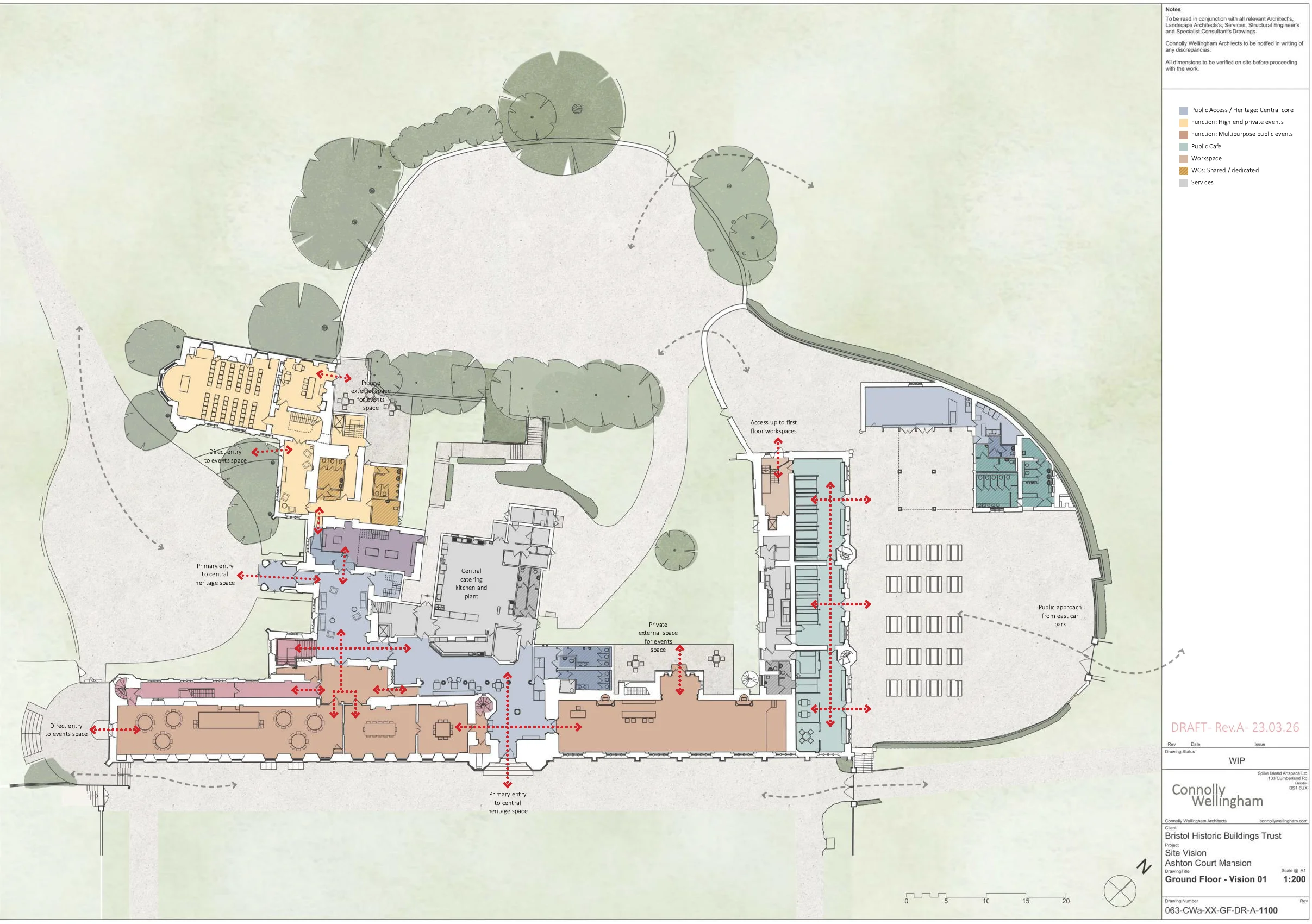
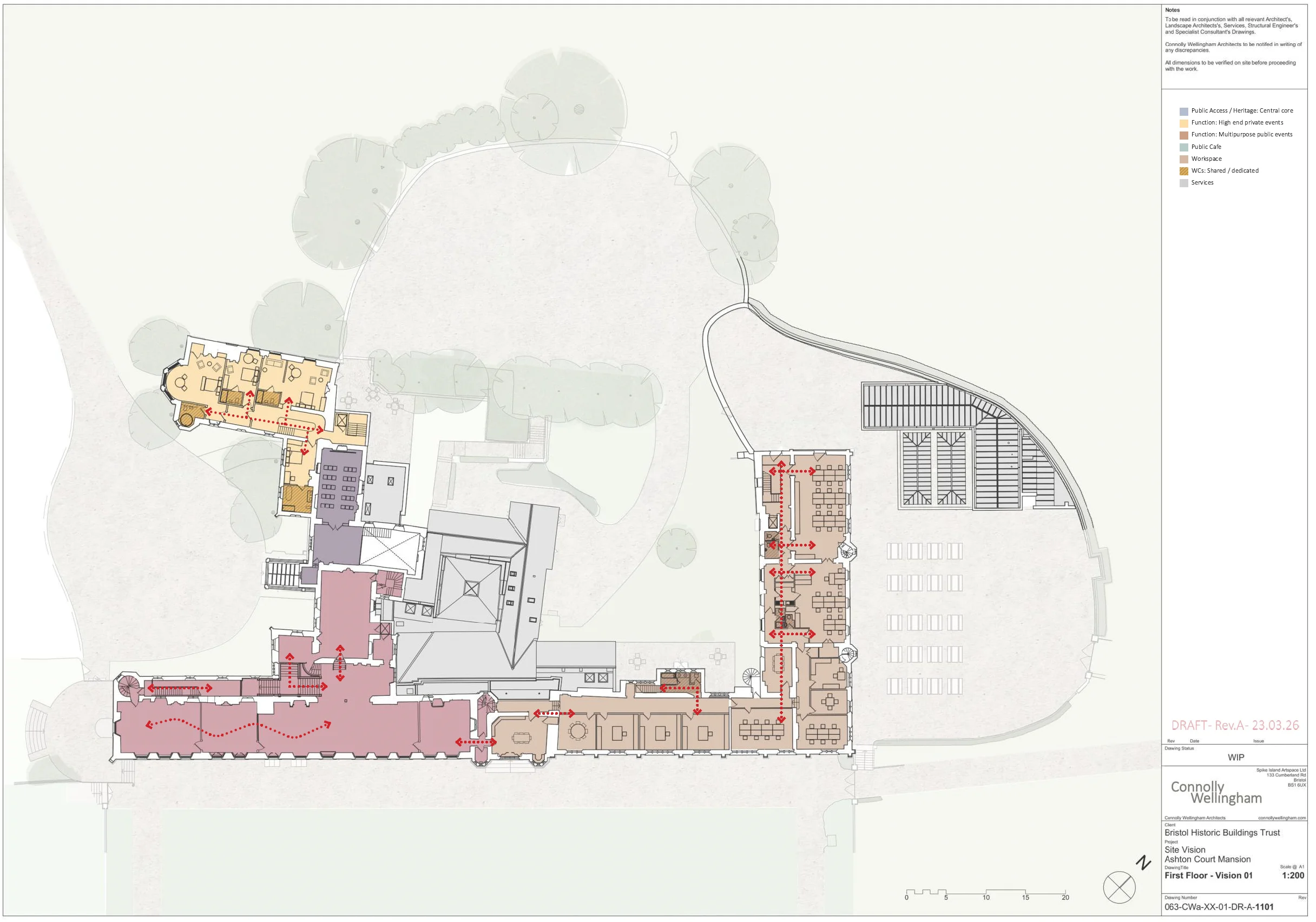
Our architects, Connolly Wellingham, have developed initial proposals showing how different parts of the Mansion could be used.
These are working plans, not final designs. They'll continue to develop as we learn more about the building, work through conservation requirements and shape the activities that will take place here.